New bee superfood

Welcome to NZ Beekeepers+
Would you like to join the rest of our members? Feel free to sign up today.
Sign up
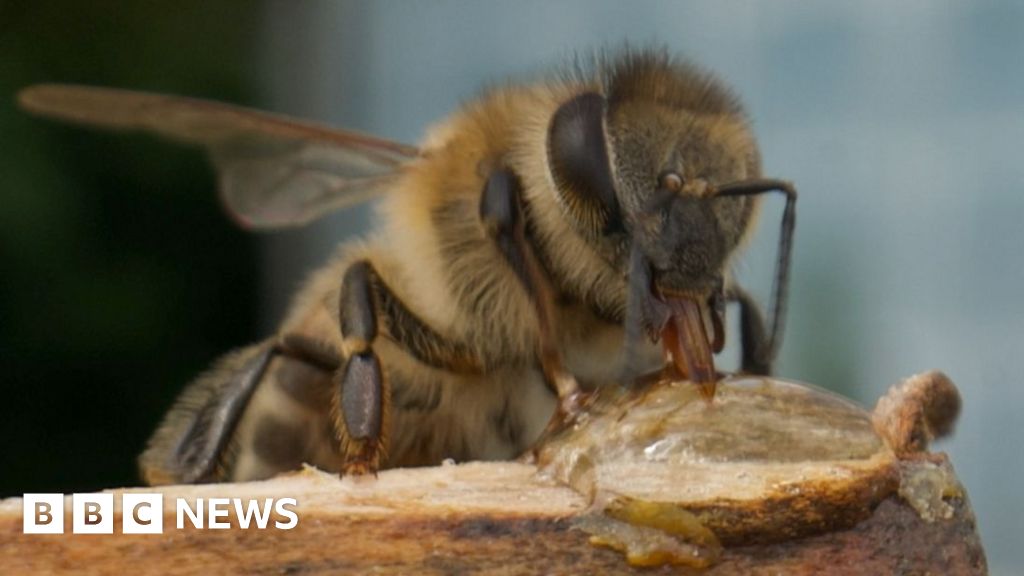
Scientists have made an "improved" pollen substitute.
For a simple read, the BBC report- and at the end is a link to the full publication.

The base problem is a lack of pollen for the bees- so instead of restoring our ecosystems -Science to save us,
 

Alastair

Founder Member
Platinum
8,894
10,076
Auckland
Experience
Semi Commercial
It was on the TV news tonight.

No doubt it has good stuff in it.

However in Britain the bees suffer from monoculture, ie, huge areas with just one crop. That can cause a deficiency of some needed nutrient in that particular pollen from the crop in that area. In NZ we do not so much have that issue, for example my own bees are gathering pollen from a multitude of different plant types. So likely are not suffering any deficiency, which means they would not benefit from additional nutrients, which they already have.

Couple of things raised my doubts. The claim was made that bees fed this superfood raised 15 times as much brood as bees not fed it. That could only be possible if the comparison is being made against some extremely weak hives. It was also claimed that bees fed this superfood will be more resistant to pests. However if the pests referred to are varroa, they do better feeding on a healthy well fed host, than a malnourished one. So I would have to doubt that claim also, and wonder if the researcher is a little naive, or at least a bit over optimistic.

However if somebody's bees are lacking in the particular nutrients in the superfood, then no doubt they will benefit from getting it.
 
  • Like
Reactions: Gino de Graaf
8,964
5,392
maungaturoto
Experience
Commercial
The claim was made that bees fed this superfood raised 15 times as much brood as bees not fed it.
kinda true in winter. i think they where testing inside a glass house. so yes, when you have little to no pollen source your going to get 15 times more brood when you feed them pollen. no surprises there.
most of the claims they had on tv was all spin for non-beekeepers.

overall it may be helpfull, but its certainly not going to stop the bees from dieing thats for sure.
 
46
31
Dunedin
Experience
Hobbyist
Scientists have made an "improved" pollen substitute.
For a simple read, the BBC report- and at the end is a link to the full publication.

The base problem is a lack of pollen for the bees- so instead of restoring our ecosystems -Science to save us,
Science....

You are so, so right, Mummzie, When I read the BBC announcement my impulsive first thought was : great! Second thought came when reading the paper and understanding it once again involved the use of genetically manipulated, sorry "modified", organisms. Once again an example of how mankind first destroys, then invents another disaster to fill the pothole it created itself.

I am a retired biologist, but the older I get the more I realise the extent of our scientific meddling. Mankind only cares for Nature when it can profit from it.
 
  • Agree
Reactions: Mummzie
5
2
Hawkes Bay
Experience
Researcher
Science....

You are so, so right, Mummzie, When I read the BBC announcement my impulsive first thought was : great! Second thought came when reading the paper and understanding it once again involved the use of genetically manipulated, sorry "modified", organisms. Once again an example of how mankind first destroys, then invents another disaster to fill the pothole it created itself.

I am a retired biologist, but the older I get the more I realise the extent of our scientific meddling. Mankind only cares for Nature when it can profit from it.
Nothing wrong with genetically manipulated organisms. A lot of our pharmaceuticals are now made that way. A decent pollen substitute would be really helpful in some commercial pollination situations such as blueberry pollination or any other monoculture under nets. For bumblebee keeping it would the holy grail.

Cheers
Nelson
 
46
31
Dunedin
Experience
Hobbyist
This may not be the platform for a scientific or political discussion about the risks vs potential short term benefits of GM and GMO, but on the other hand we all have responsibilities in that sense. With all due respect for everyone’s founded or unfounded opinions, I think it is fair to say that collectively we have the responsibility to inform ourselves and to leave this world in a decent shape for the next generations of all natural life forms, not just short sightedly for humans and humans’ interest only. It helps when we inform ourselves about risks above the personal or short term benefit, but the info available is not easily accessible and clouded by financial interests. There are plenty of reports that demonstrate that genes can go walkabout in an unforeseen way, in spite of all the pledged non-risks, altering life forms that were not intended or foreseen to be able to become genetically altered whuich may entail significant risk for the ecosystem. Even as early as 1989 a scandal with supplements involving components produced by GM bacteria (that I at the time thought was without any reasonable risk!) caused deaths and a never before documented form and long time unexplainable form of myalgia. The Japanese company that used these bacteria had no license for GM in production processes and is reported to have destroyed the evidence as soon as there were any concerns raised. So there never was hard proof and big money supported coverups abounded, but later experiments reconstructing the GM bacteria saw the components produced that were suspected of the ‘disease’ outbreak. So this did not even involve Nature (of which people once were part) being directly exposed to GM organisms, just to the products those organisms produced.

I am old enough to not have to see many more consequences of our human meddling with Nature, but many of us will. And certainly many more after us will.
Please, if must be I will happily beg: there is so much we can do with common sense while working in line with Nature, instead of against it. By definition humans are never smarter than Nature, simply because we can not grasp the big total. But will we ever learn?

Nature always wins, it might just be a very different Nature, that has been and continually is thrown off-balance by our greed and if we want to deny greed, at least by our meddling. That future Nature might not be as wonderful as the one we grew up with.

And yes, I took the RNA-based anti-Covid vaccine, but would have preferred the regular one which unfortunately and I would like to add shamefully was not readily available in NZ. We will still have to see if that was a good decision in the decades to come.

I wholeheartedly wish every one of us good decisions. Thank you.



Top